





Connect with a Lima One expert today!
If you’d like to know more about this topic or see how it applies to your project, let’s talk.
BlogExpert InvestorsNew Construction
Five Housing Trends Shaping the Portland, Oregon MSA New Construction Market
By Joshua Schwartz, Senior Loan Originator, Lima One Capital
The Portland metropolitan area home market is thriving – and for builders and real estate investors active in new construction in Portland, Oregon, and Vancouver, Washington, the opportunities have never been more compelling. But the growth evident across the region comes in different shades and flavors.
Demand for housing is strong across PDX, on both the Oregon and Washington sides of the border. But supply constraints, shifting regulatory regimes, and evolving buyer preferences are dictating both how many homes are built and what kind get built in each unique submarket.
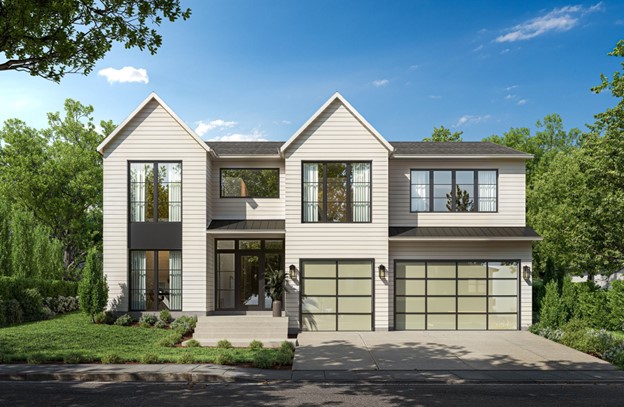
My work with builders around the area has provided a 30,000-foot view on housing trends in and around Portland and shown me many great examples that you can see across the market, as well as in the 2025 Street of Dreams. The five trends below, which are based on my experience and the expertise of many builders in the area, will help homebuyers, builders, officials, and real estate investors understand the uniqueness of the growing Portland MSA housing market as we move through 2026 and beyond.
1. Performance and Wellness Building as a Market Differentiator in Portland, Oregon, New Construction
Sustainability is no longer a niche add-on in the Portland region; it has become a mainstream expectation, and one of the defining features of new construction in Portland, Oregon, today. Homes built to perform efficiently attract residents who care about the environment, healthy living spaces, and long-term utility savings.
So, it’s no surprise builders across the Portland MSA now treat sustainability and wellness as core product offerings. As of November 2025, more than three-quarters of the Portland homes listed for sale on Redfin are characterized as green, among the highest proportions of efficient properties anywhere in the country. Some municipalities now incentivize or even require efficient builds.
The great news is that builders in the Portland MSA are offering efficient homes at every price point, from large luxury homes to townhomes in desirable suburbs. These homes are increasingly drawing buyer attention and commanding pricing premiums.
Tony Marnella, a Vancouver-based builder with 25 years of experience in the market, ensures that every property he builds is certified to stringent green build standards and Zero Energy Ready. This offers residents homes that “are at the cutting edge of wellness and design,” Marnella said.
His recent townhome builds in Vancouver, Washington, overlooking the Columbia River and the state border, are a prime example of this wellness-focused approach. The homes feature healthy, comfortable indoor environments, water filtration and purification, hydroponic grow stations for healthy produce, and smart air management that continually monitors indoor air quality. This development is also the first in the Northwest to feature SmartCycle lighting that is programmed to align with the homeowner’s circadian rhythms.
2. Portland’s Infill and Middle‑Housing Push Creates New Construction Opportunities
The city of Portland has embraced infill and “gentle density” strategies in single-family zones to unlock more housing in already-served neighborhoods – creating a pipeline of new construction in Portland, Oregon, for builders who know how to navigate the regulatory environment.
The Residential Infill Project, active since 2021, allows duplexes, triplexes, fourplexes, and cottage clusters in zones that were previously constrained. By replacing an old home in need of repair with multiple units on the same lot, this initiative accelerates needed building activity. This program resulted in 1,400 new builds in the 36 months immediately after its launch, providing much-needed housing inventory in Portland at more affordable price points.
The creation of the Middle Housing Land Divisions (MHLD) has made this strategy even more accessible for builders. A prime example is the Alberta Arts Cottages project built by Dez Development.
“We were able to take a severely neglected home with the roof caving in and turn that property into three single-family cottage homes,” said Slavik Dezhnyuk of Dez Development.
The initiative is making a difference, with middle housing taking a greater percentage of home permits in the city. Portland’s 2025 state of housing report showed a significant spike in middle housing permits every year starting in 2022.
“Our focus is to deliver high-quality homes and to build a product that is much needed in the Portland area. All our staff are highly motivated to deliver a quality homeownership opportunity to as many people as possible,” Dezhnyuk said. “I feel a responsibility to contribute to the city’s growth in a way that strengthens the city and strengthens our neighborhoods.”
3. Lake Oswego: Luxury New Construction in a Supply-Constrained Market
Lake Oswego continues to occupy a unique niche in the Portland MSA housing ecosystem as a high-end enclave just 10 minutes from downtown Portland. Desirable school districts, natural beauty, lower county taxes, and charming livability have attracted homebuyers with bigger budgets, creating strong demand that supports higher prices.
Because of the urban growth boundary and limited buildable land, new construction is constrained in the Portland, Oregon, Lake Oswego submarket, which drives home prices up. As a result, much of the new housing inventory is larger single-family homes that are attractive for high-end buyers.
Some builders are taking innovative approaches in Lake Oswego. Alex Koval recently built a development of high-end townhomes with desirable features like rooftop decks that add a more affordable option to the market that attracts empty nesters and younger homebuyers. These townhomes also provide density that allows Lake Oswego to continue to grow while making it accessible to a broader percentage of the population.
4. Happy Valley: Suburban Growth with Growing Demand
Happy Valley illustrates the opportunities housing provides in outer-ring suburbs, along with accompanying pressures such as growth expectations, volatile pricing, and stretching infrastructure.
This submarket offers a more affordable median price than Lake Oswego, making it a desirable location for residents who want more for their money.
Suburban growth corridors such as Happy Valley will need carefully calibrated product types, density, and infrastructure provisioning so that they attract residents without creating a housing bubble. Builders who can move quickly and secure reliable capital will be best positioned to capture this demand.
5. Vancouver, Washington: New Home Construction Demand Rises Across the River
Vancouver, Washington, is increasingly absorbing demand overflow from Portland, Oregon, across the Columbia River, especially for renters and buyers seeking more affordable alternatives. The redevelopment along the riverfront is marked by high-end townhomes as well as multifamily properties that have resonated with renters.
Vancouver offers residents significant tax benefits if they work on the Washington side of the border. Residents can benefit from Washington’s no income tax laws, while also having the opportunity to cross the border to benefit from Oregon’s no sales tax regulations. This dual benefit makes Vancouver an ideal landing spot for remote workers looking to relocate to (or within) the Portland MSA and makes Vancouver both a competitor and a valve, releasing some of the demand pressure for Portland housing.
Conclusion: Final Observations on Portland, Oregon, New Construction
From this tapestry of trends, a few strategic observations emerge for builders, investors, and buyers active in new construction in Portland, Oregon, and Vancouver, Washington, including:
- The supply gap will widen unless permit reform and infill yield gains offset the steep drop in large multifamily permitting, especially in Portland;
- Location stratification is intensifying with premium nodes such as Lake Oswego remaining tight and expensive;
- Infill zones are underutilized but gaining traction;
- Outer suburbs and cross-river markets are volatile but vital, and cross -jurisdiction competition matters.
For builders who need a financing partner that can keep pace with the speed of these opportunities, Lima One Capital is the construction lending solution built for the Portland MSA. Contact Lima One today and start a loan.
About the Author:
Portland native and Vancouver resident Joshua Schwartz is a senior loan originator for Lima One Capital, a national private lender that finances real estate investors. For more information, visit limaone.com.
Subscribe for More Insights
Get the latest industry news & Lima One updates.